


I think I jinxed myself. Two years ago, I wondered about whether or not the “greats” should retire. This came after both Francis Ford Coppola and Kevin Costner risked it all and failed at crafting their magnum opus in Megalopolis and Horizon. They were narrative, critical, and commercial failures. No one was telling them no. And, like Icarus, they flew too close to the sun and have been in a free fall ever since.
Is It Time for the Great Directors to Retire?

As we barreled head-first into the Year of our Lord 2024, there were two movies so daring in conception that they immediately catapulted to the top of my most anticipated movies list. On paper, these two projects had a lot in common. Both were ambitious, self-funded passion projects written and directed by Oscar-winning mavericks. Both were provocative…
My eulogy for the greats of New Hollywood carved out two filmmakers who had been relatively unscathed: Steven Spielberg and Martin Scorsese. Spielberg especially has maintained artistic, critical, and commercial success for going on six decades. And while West Side Story and The Fabelmans were financially held back by the lingering effects of the COVID-19 pandemic, they nonetheless showed a filmmaker in the twilight years still with something creatively to prove. Last weekend, Spielberg was vindicated for his efforts. His science fiction thriller Disclosure Day opened above industry tracking with nearly $100M worldwide. His largest for an original film. Critics liked it, too. Riding the wave of Backrooms and Obsession, the maestro of blockbusters showed that he was still relevant after all this time. The king of the summer multiplex is back. Or is he?
Telling the story of a whistleblower and a Kansas City weather-girl whose lives collide as they race to disclose the existence of extraterrestrial life to a world on the brink of war, Disclosure Day is a genuine creative mess. Shockingly so. Maddeningly so! An ill-conceived, well-intentioned disaster woefully out of touch with the twenty-first century. Weirdly, this movie feels like a better-produced, clearer-eyed version of Coppola’s Megalopolis. Yikes.
Your investment in (and admiration of) this movie will depend on your willingness to buy into a central premise: Revealing that aliens are real will bring humankind closer together. That we’ll lay down our arms, end wars, and sing Kumbaya around the campfire. Take your time to think about it. No rush. If you reflect and think to yourself, “Yeah, something like this can only bring about good. The truth will set us free,” then — in the words of Lucille Bluth — good for you. Our protagonists would agree with you. Personally, it took me about five-tenths of a millisecond to say, “Absolutely f***ing not.” Call me jaded, call me cynical, call me weary. I frankly don’t care. It’s silly. It’s way too simple. It’s far too sentimental to be taken seriously. It’s an almost comical premise that is so earnestly and literally stated throughout the movie that it feels close to belonging with the fake trailers at the start of 2008’s Tropic Thunder. This stubborn belief that disclosure will be good for humanity makes both the protagonists and antagonists unrelatable — because neither side is right nor convincing. Alien disclosure will neither bring the world together nor destroy it.
In the current digital age, it would be a story for a few hours. There would be viral tweets, crazy aunts and uncles fighting in Facebook comments, and funny reels on Instagram and TikTok. Then, poof! It’ll be gone. Over. Moving on to the next trend. The next breaking news story. Because in an age where everything is breaking news, nothing is. Spielberg’s sentimentality tries to sweep that under the rug. But we can still see the obvious even if he tries to cover it. What makes that so maddening is that we’ve seen the bard of the sky’s cynical and darker takes on the genre in Minority Report and War of the Worlds. Both entertaining and provocative. This movie is neither.
Not only that, but the third act of the film explicitly requires you to buy into the idea that broadcast news (and, more specifically, local broadcast news) still is the center of culture and newsgathering. Over the span of three minutes, a stiff-lipped Emily Blunt (Can we please stop with the Botox, folks? Embrace your natural beauty, dammit!) goes from the Kansas City metropolitan area to Rockefeller Center, and from all major domestic news channels to the entire world. No vetting of the disclosed information, no questioning. Just a single throw-away line about the eight decades worth of footage possibly being AI. Then, it’s brushed aside because “it belongs to the world.” Good grief. There is no doubt, no second-guessing, no questioning about the materials. And thanks to the brave, intrepid actions of a few controllers in New York City, the whole world can see the truth and save the world in the process. Hooray!
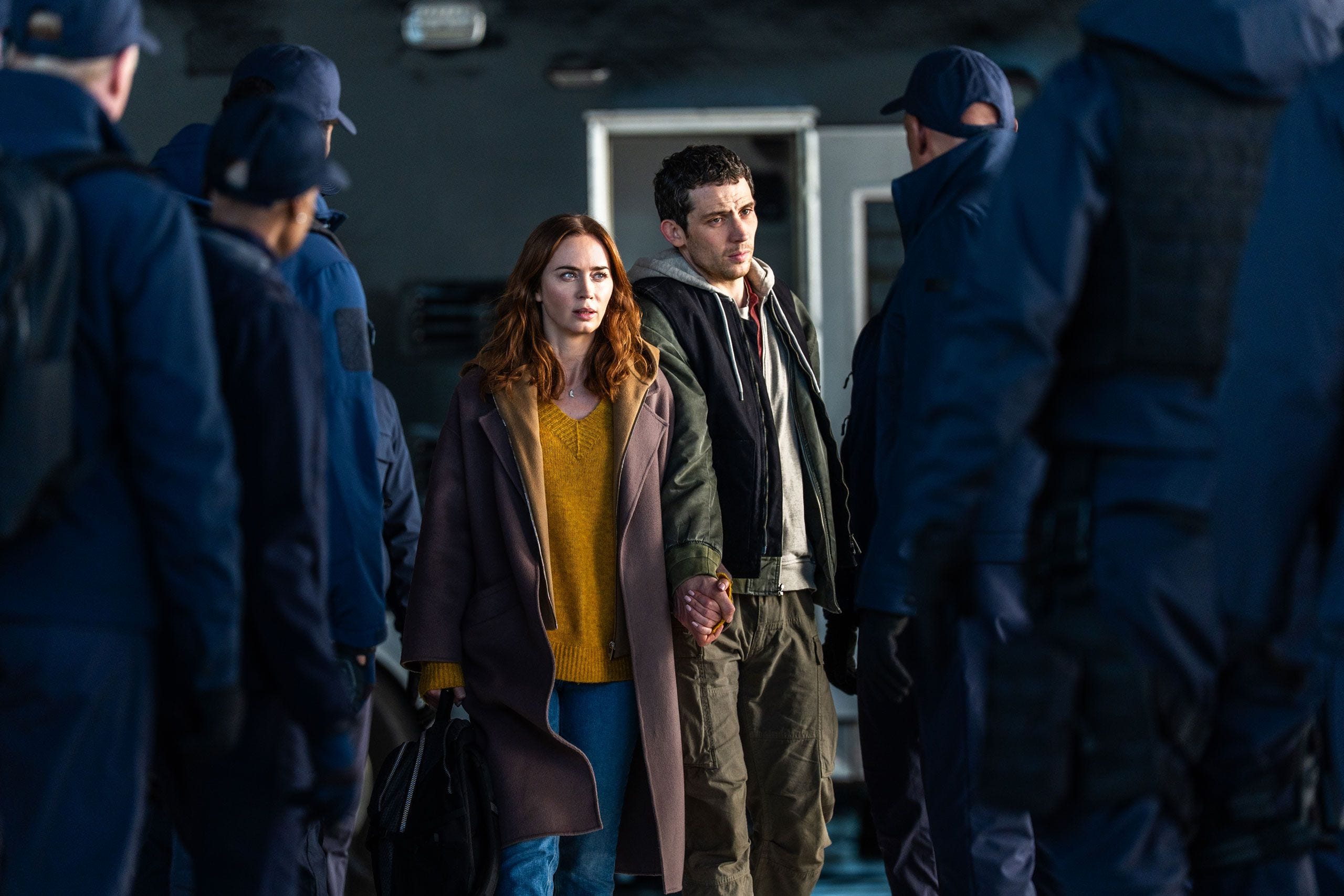
If the sarcasm isn’t coming through, let me be blunt — Emily Blunt, that is — and say that this movie is the sentimental leftovers of Spielberg’s greatest science fiction achievements with a massive dose of out-of-touch liberal attitudes about cultural institutions that made 2018’s The Post an eye-rolling slog. And this is before we even get to the lack of wonder and mystery, the sluggish runtime, the one-dimensional performances, the thinly written screenplay, the heavy-handed dialogue, the ridiculous McGuffin that magically aquires new abilities for the sake of advancing the plot, the monologues about empathy “being the greatest evolutionary advantage,” the silly Three Stooges-like slapstick set piece involving an invisible house (no that’s not a typo), the questionable CGI, the questions of politics and theology that are raised and then brushed aside out of fear of alienating anyone (pun intended), or the jarring tonal inconsistencies that jerk the movie between thriller and comedy.
All of these problems are downstream of something quite simple: This is the first time since 2001’s coldly beautiful A.I. - Artificial Intelligence that Spielberg has any kind of writing credit. But that film was based on a treatment by Stanley Kubrick. It was not an original project for Spielberg. He wrote a fifty-page treatment that was adapted by David Koepp. Famously, this was a hard story for the seasoned writer to crack. Koepp wrote forty drafts; the most he’s ever written for any of his pictures. He seemed to really struggle cracking this story. That should have been a warning. Spielberg’s other favorite writer, Tony Kushner, is known for having outsized opinions and his on-set arguments with the director. They disagree a lot. They push each other and test each other’s creative limits. But the result is always more profound. Their four collaborations (Munich, Lincoln, West Side Story, and The Fabelmans) are, apart from Minority Report and Catch Me If You Can, Spielberg’s best films of the century. Koepp seems to be a pleaser, unable to say no to Spielberg.
And we’re back to the start: the Great Directors have a problem with people telling them no. Coppola imploded for the third time due to his ego and vanity, thanks to Megalopolis. Costner unceremoniously ended his career revival and turned one two-hour concept into a four-part epic — of which we’ve only seen the first act. That’s because they listened to no one but themselves. Creative tension is good. After thirty-five films, it’s hard not to wonder if Spielberg is getting too comfortable with his collaborators to the point where there is none of that tension. Maybe Kushner should write all of his films moving forward.
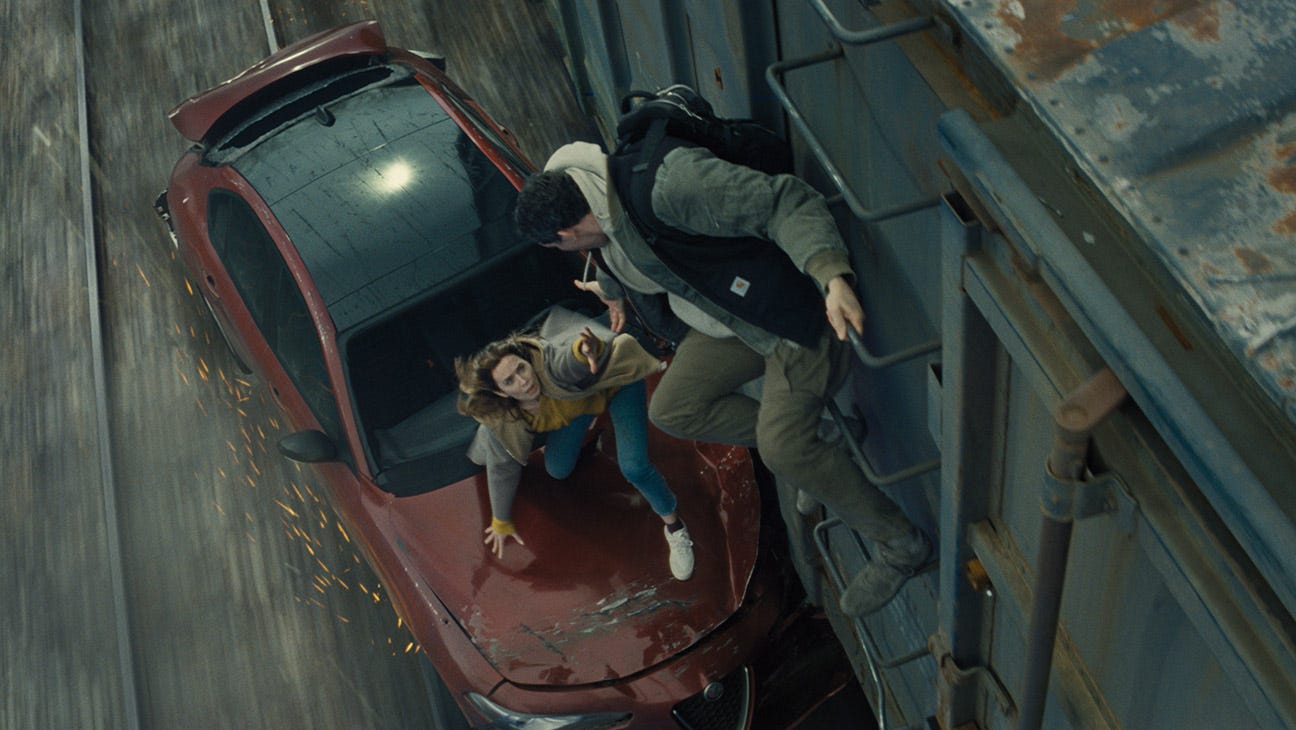
Listen, I love that Steven Spielberg took a big swing. I love that the studio system will still give him the money to do it. I love Emily Blunt’s performance, which is truly one for the ages – and I don’t mean that as hyperbole. It’s genuinely amazing. I expect an Oscar nomination for her come January. And I don’t deny that Spielberg can still direct a movie like no one else. Two sequences in particular, involving a lengthy futuristic interrogation at a farmhouse and another with two speeding trains, are expertly crafted and staged. The problem is that they’re mid-movie peaks that the rest of the picture cannot catch up with.
Weighing the good along with the myriad of the misguided, the out-of-touch, and the bad makes the film feel like just the unwanted leftovers from Close Encounters reheated and spruced up with some ugly-ass CGI birds and animals. I was alienated by the end, left cold and bewildered at how such a big swing could miss so wildly. And it looks like I’m not alone. Box office analysts indicate a 65% drop in domestic grosses this week.
Here’s hoping his western is a rootin-tootin’ return to form.
Disclosure Day is now playing in theaters nationwide. Rated PG-13 for action/violence, some bloody images, and strong language.
100% agree with all your points here (also the Lucille Bluth quote? you’ve got my attention). I struggled so much with the screen play, it felt so haphazardly put together without any interesting emotional through line to connect anything.
I wrote about the character/screenplay issues here if you’d like to take a look!! https://lobbyconversations.substack.com/p/audience-empathy-is-earned-not-guaranteed?r=86e14f&utm_medium=ios
Spielberg is an expert director, but a terrible writer. He understands storytelling, but doesn't quite understand story, if that makes sense. I actually found similar issues with Close Encounters (I saw it for the first time a few months back), where the characters seemed totally inscrutable in terms of their behavior (and no, I'm not just talking about Dreyfus losing his mind) and a lot of what happens seems to happen just so we can get to the (admittedly quite stunning) ending Spielberg wanted to get us to.
I found the third act of Disclosure Day pretty gripping, in a vacuum, because it was so well crafted that I couldn't help but put myself in a mindset where I'm imagining what it might be like to actually be watching this for real on TV. But everything around it is so convoluted and convenient that it all falls apart the moment you think about it. It's a shame, because there's cool stuff here, but it just doesn't work.